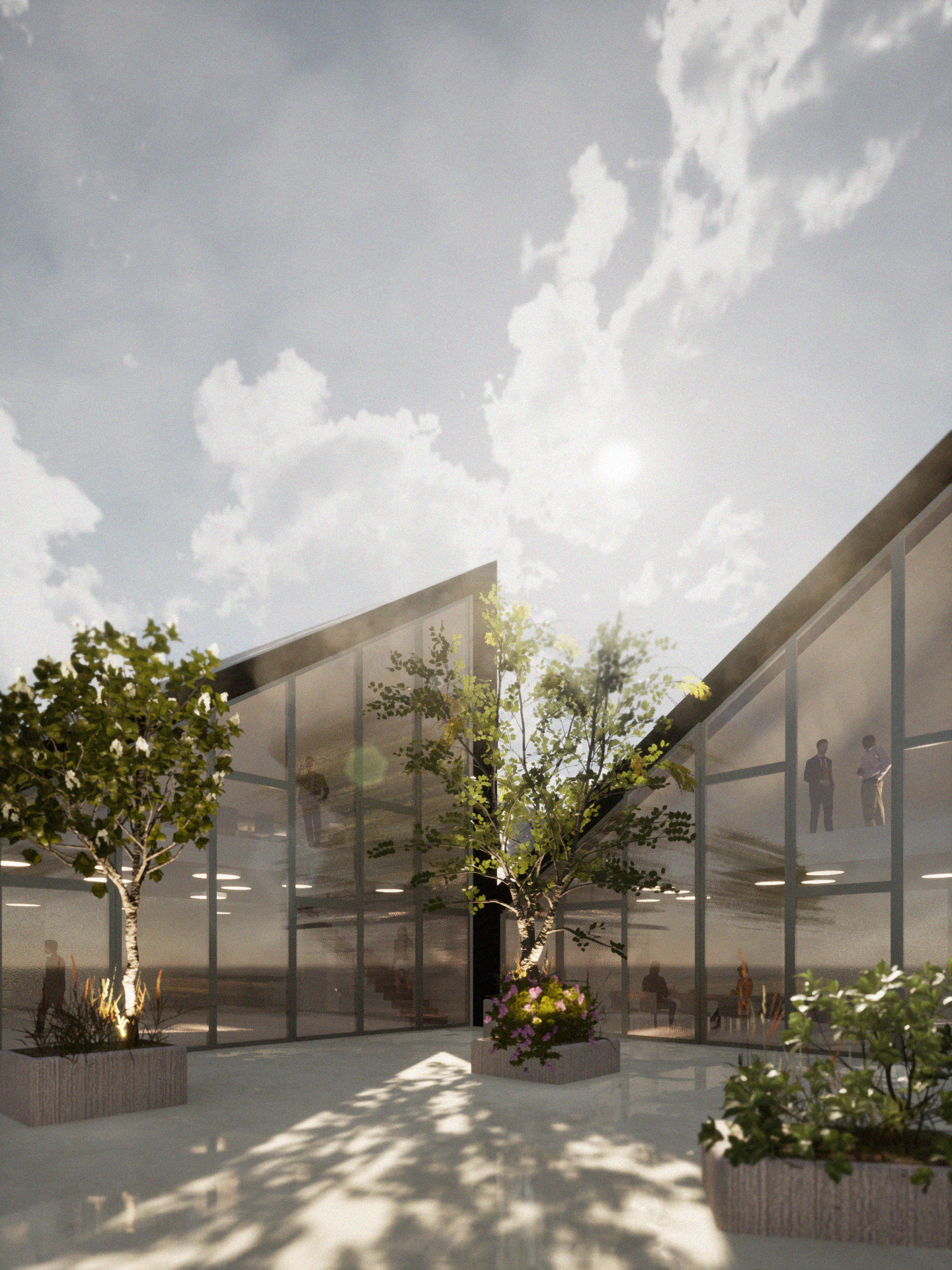
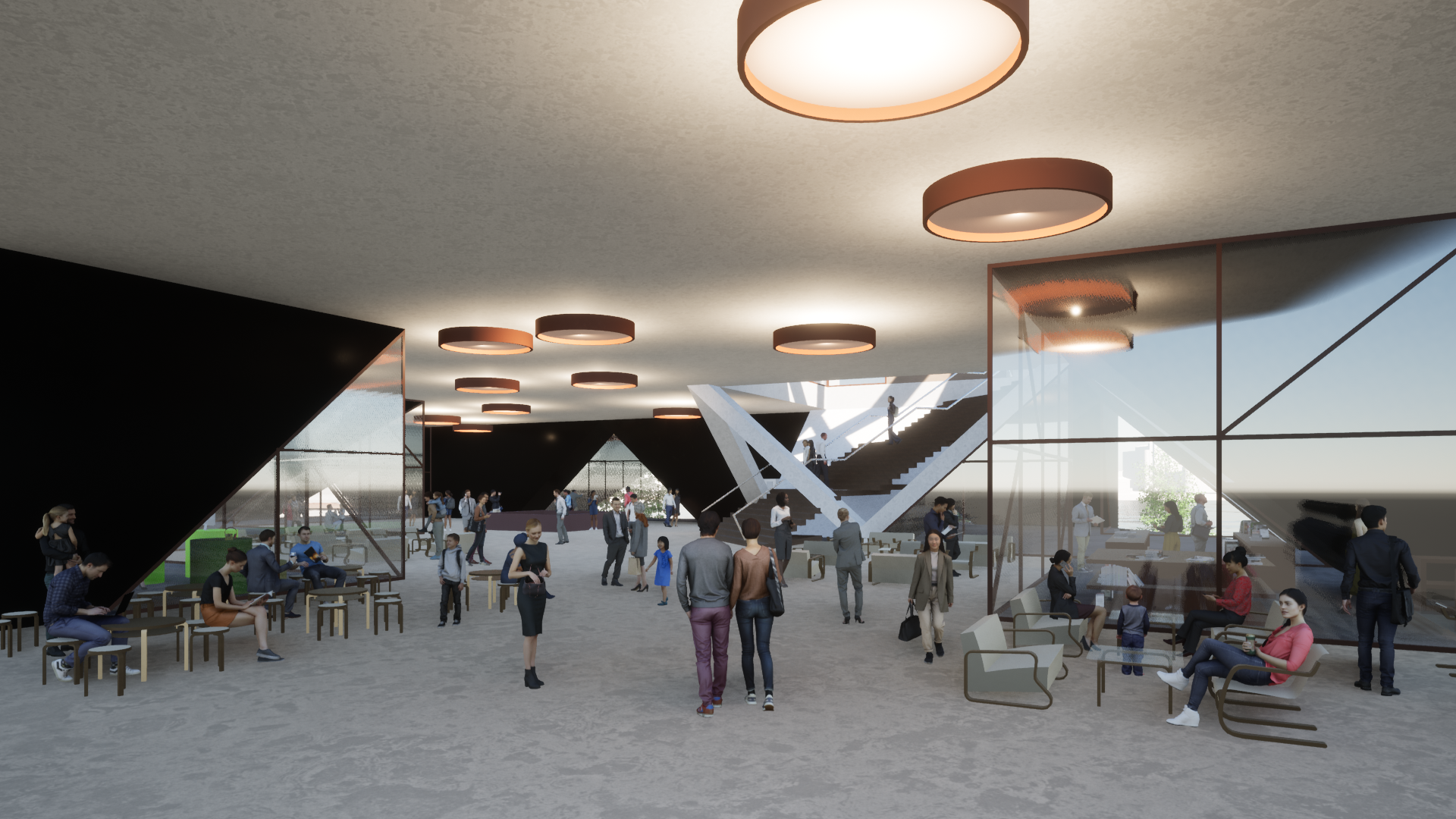
The new Finnish Design and Architecture Museum will be built on the waterfront of the port of Helsinki. The competition brief calls for a 10,050 m2 building with a vast array of public spaces orbiting the exhibition galleries and an equally large amount of back office and logistic spaces.
The section diagram at the base of the design has been conceived as the layering of three different spatial situations hosting the main thematic areas of the complex.
On the bottom, a freely accessible vaulted space where various activities, stable and impromptu, formal and informal, interact among them as the public life flows all around.
In the middle, a neutral and endlessly reconfigurable exhibition hall only described by a floor, a ceiling and a grid of pillars; a blank space with no shape, ready to be shaped at the convenience of its content.
On the top, a cluster of interconnected pavilions containing the offices, their terraces and the extra heights of the exhibition space below: a village of small sub-buildings in dialogue among them and the Helsinki skyline.
These three environments take life from the replication of one square-planned volume, with peaks upwards and downwards, vertically subdivided according to the described tripartition. The twenty-three modules are arranged on an orthogonal grid filling all the buildable area, and each specimen is specifically oriented in order to collaborate with the adjacent ones in shaping the vaulted lobby below and the rooftop village above.
Being underground building not allowed, all the logistic, technical and storage spaces are hidden in a steps-girdled platform at level zero, lifting the actual museum on a crepidoma like an ancient temple. This way the lobby of the museum becomes an elevated terrace in continuity with the public space of the waterfront.